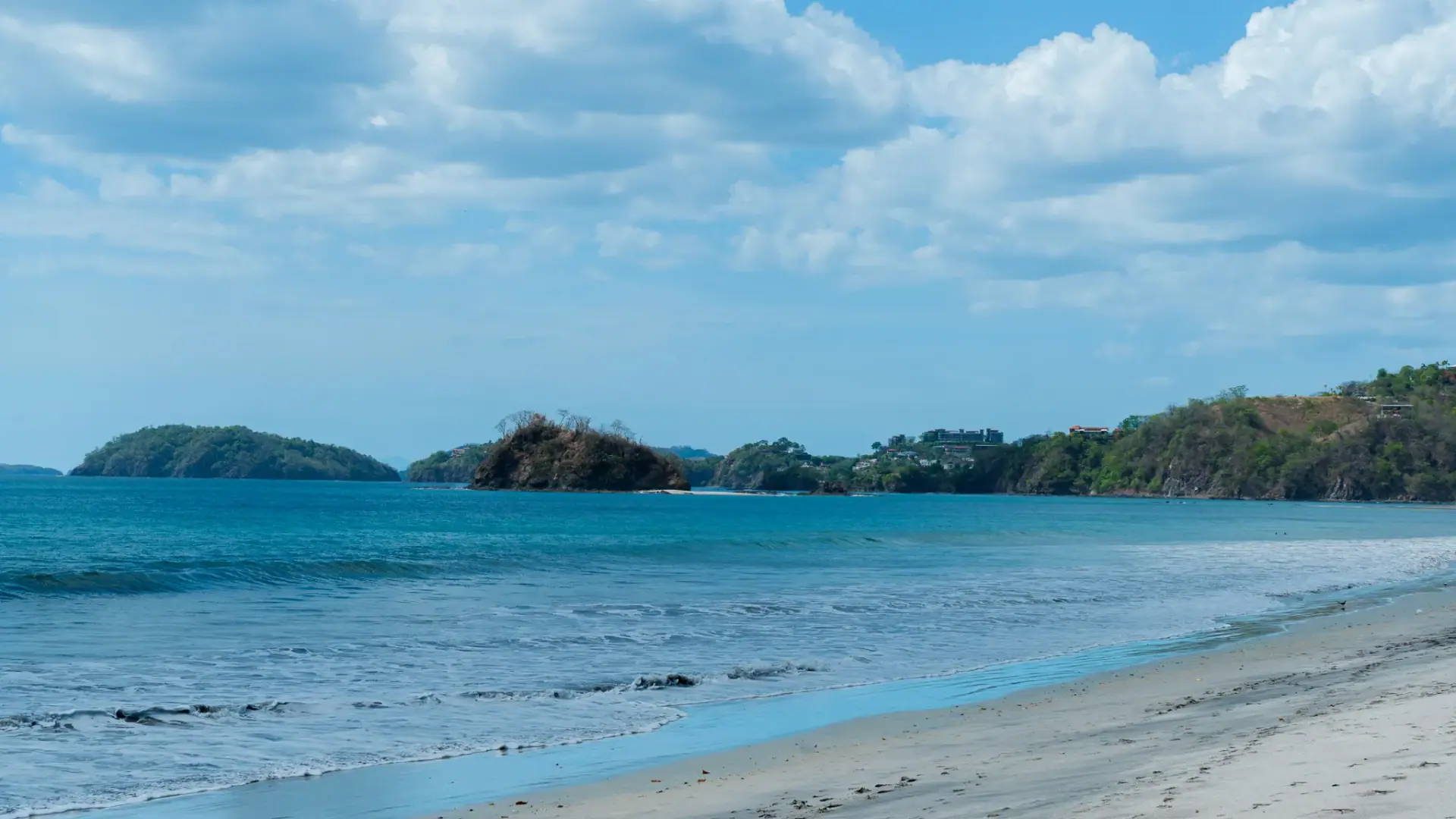
Costa Rica is one of the few countries in the region where a foreigner can own titled property with exactly the same rights as a citizen — no residency, no local partner, no trust structure. This guide walks through how the process actually works, what it costs, and where buyers get into trouble.
Foreign ownership of titled land
Typical closing timeline
Combined closing costs
Residency required
- 1Confirm the property is titled (fee-simple), not concession
- 2Make a written offer and sign a purchase agreement
- 3Run legal due diligence on the national registry
- 4Close before a notary public and register the transfer
- 5Set up ongoing obligations: taxes, corporation, utilities
Step 1 — Confirm what kind of land it is
Most inland and hillside property in Guanacaste is fee-simple titled land (propiedad titulada), registered in the Registro Nacional. Within the first 200 meters from the high-tide line, most land is Maritime Zone concession — you lease rights from the municipality, foreigners face ownership caps, and financing is harder. Neither is bad, but they are different products with different risk profiles.
Step 2 — Offer and purchase agreement
Offers are typically formalized in a bilingual Opción de Compraventa with a 5–10% deposit held in escrow. Costa Rica has licensed escrow companies regulated by SUGEF — use one, and never send deposits to a personal account.
Step 3 — Due diligence on the national registry
Your attorney pulls the estudio de registro: title history, liens, mortgages, easements and annotations, all from the centralized Registro Nacional. They should also verify water availability letters, zoning (uso de suelo), and municipal taxes. This phase usually takes two to three weeks.
Step 4 — Closing and registration
Closings happen before a notary public, who in Costa Rica must also be an attorney and holds public faith. The notary drafts the transfer deed, disburses escrow, and files the transfer with the registry. Registration makes your ownership effective against third parties.
| Cost item | Typical amount |
|---|---|
| Transfer tax | 1.5% of fiscal value |
| Registry stamps & fees | ≈ 0.85% |
| Notary/legal fees | 1.0–1.5% |
| Escrow service | 0.25–0.5% |
Step 5 — After the closing
Most investors hold property in a Costa Rican corporation (S.A. or S.R.L.) for liability and estate-planning flexibility. Annual obligations are light: property tax of 0.25%, the corporation tax, and the luxury-home tax only above roughly $250K of construction value.
Do I need to be in Costa Rica to close?
No. A power of attorney lets your lawyer close on your behalf, and escrow disbursements are handled remotely. Many of our clients close without a single trip — though we recommend walking the land at least once.
Can I get title insurance?
Yes. International underwriters issue title policies for Costa Rican fee-simple property, and lenders that finance locally usually require it.
Is financing available for foreigners?
Local bank financing for non-residents is limited and expensive. Most foreign buyers pay cash, use home-equity credit from their home country, or negotiate seller financing.
Updated June 24, 2026